
In honor of February being American Heart Month, I’ve decided to share a story of someone who is very dear to me- my grandma Mary. I’ve actually never met her- I never met either of my grandmothers- at least not in the flesh. My mother’s mother, Mary Elizabeth Neal Perry, passed away in April of 1979 from heart disease- she was 51 years old. I don’t know much about her- by the time I came along she had been gone for 4 years. As I got older and I would ask my mom about her, she’d tell me the things she could remember; she was only 22 years old when she lost her and she was more of a self-proclaimed daddy’s girl. But, from what she did tell me, they seemed very similar.
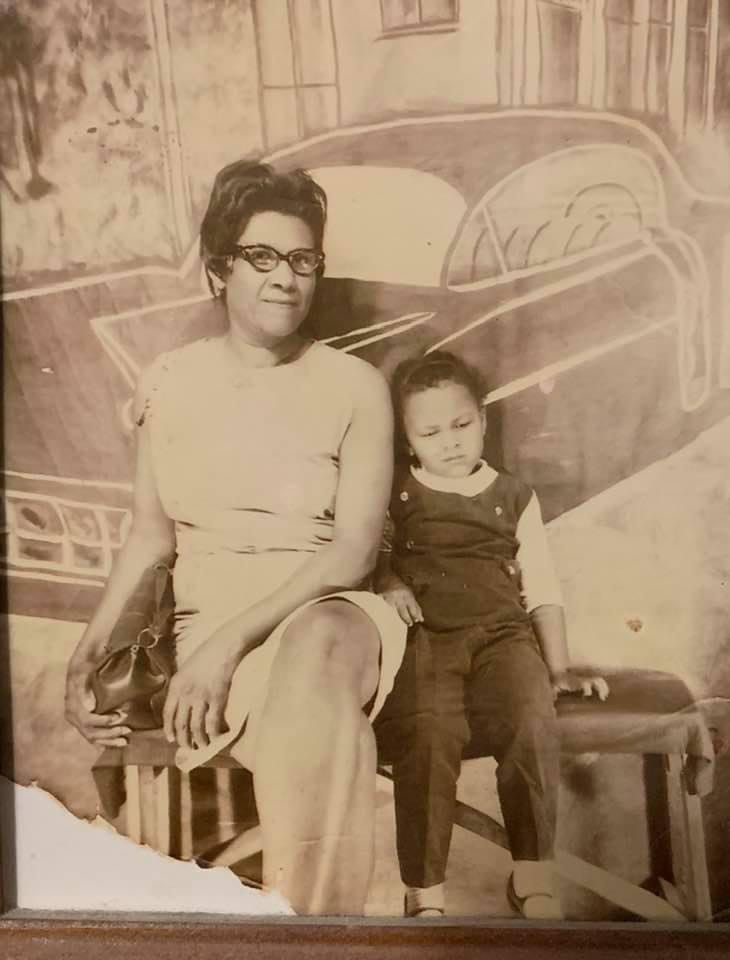
I know that they called my grandma ‘boot’ and that she loved to dance. Apparently her favorite song was ‘Got to give it up’ by Marvin Gaye. From what ma told me, she was the life of the party. I know she was the oldest of 9- 3 boys and 6 girls. Like many of her contemporaries, she had left school by 7th grade to help raise her younger siblings while her parents worked as sharecroppers. This was just the way it was at that time. She was smart, loved to laugh, and full of life.
I also know that she had congestive heart failure. Doctors wanted to put a stint in her artery to help with a blockage, but she refused. She didn’t trust [white] doctors, and growing up in Franklin County and living in Vance County, NC, I can only imagine the shit she had seen when it came to the mistreatment of her people. Before my oldest aunt was born in 1951 she had a son- I’m not sure what year he was born, but he didn’t live very long. His name was John Lee Perry and he’s buried somewhere in the cemetery at our home church, Concord Missionary Baptist in Kittrell, NC. I don’t know anything about him other than that he died and I’m sure this literally broke her heart. No doubt this, along with other overlapping factors (socioeconomic status, ethnicity, physical location to name a few), contributed to her heart condition.
According to the American Heart Association, Heart disease is the number one cause of death in women in the U.S. Perhaps what’s more striking, though, is the disproportionate rates in which this impacts black women. By the numbers:
Cardiovascular diseases kill nearly 50,000 African-American women annually.
Of African-American women ages 20 and older, 49% have heart diseases.
Only 1 in 5 African-American women believes she is personally at risk.
Only 52% of African-American women are aware of the signs and symptoms of a heart attack.
Only 36% of African-American women know that heart disease is their greatest health risk.
Source: American Heart Association
There’s an underlying cause that is not as readily addressed when speaking of this disparity. What is that? -Racism. There is so much bias in even the reporting of the statistics on this page (follow the hyperlink above). For one, the research states that scientists may have found a gene that makes black people more predisposed to heart disease. This is where I have to call bullshit. Let’s talk about the discriminate conditions that many black women in this country have been forced to live in. Take my grandmother’s example for instance…
In the Jim Crow south, which was technically only 50-60 years ago, black people don’t have the best relationship with the whites- and I’ll just leave it at that. This is especially true when it came to the healthcare system. Access to adequate and equitable healthcare, inclusive of mental healthcare just wasn’t a thing. And for my grandmother, this wasn’t even fathomable. Unfortunately, this is still a theme that permeates our community presently. Who knows how her life, and the lives of her husband, daughters, and grandchildren, would have been different had she had access to adequate mental health services after the loss of her firstborn child. What if she had even an iota of trust in a system that did not regard her as fully human? What if she did not live in what is still in the year of black, North African, Jewish Jesus, 2021 a food desert? Maybe I would have had the opportunity to meet her. Or, at least know more about the woman she was.
This is my grandmother’s story. Unfortunately, this is also the story of so many black and brown women today. Here at S.O.L.E. Food, we are creating a supportive community so that women feel empowered to not only attend to themselves, but also command the care and respect that they rightfully deserve. Below are some resources as well as a link to a Chicken Chili recipe that is heart healthy. We also want to hear from you- feel free to share your thoughts below.


 Cookin' n Heels
Share your thoughts here!